What Happened to Mike Trout?
Heroes come and go, but legends are forever.

It’s hard being the best player of all-time. Okay, maybe Mike Trout isn’t the best player of all-time, but there’s a case for it: he’s one of the best hitters of all time with some average to above-average defense as well. Mike Trout represents the struggle of the superstar better than possibly any player ever has. His story shows that baseball isn’t a one-man sport: its a team effort through and through. Although Trout is struggling, I believe that he will rebound, and, to do so, one of baseball’s greatest players needs to take a look a hard look in the mirror.
Background:
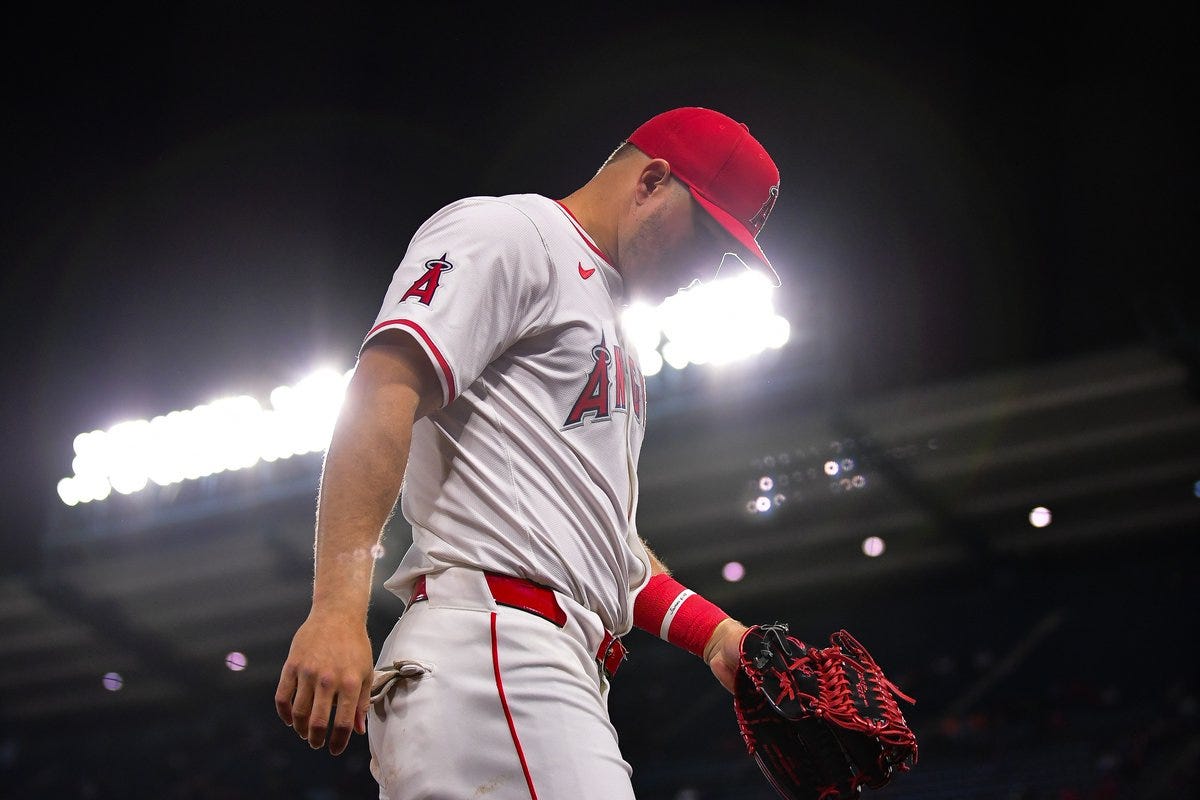
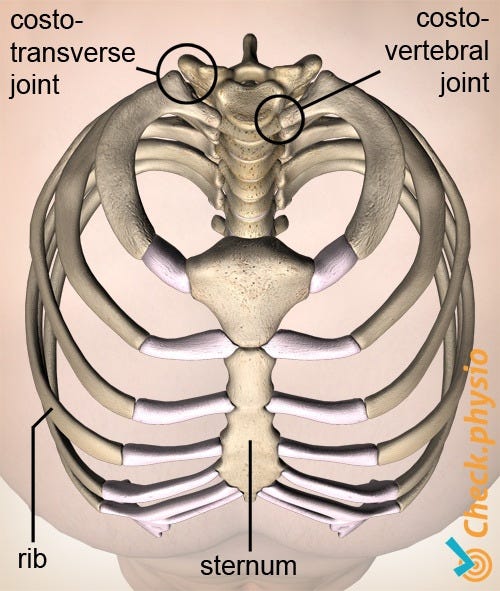
Mike Trout, 34, is having his worst ‘full’ season to date: .231 AVG / .361 SLG / .786 OPS; this same Mike Trout has a career .978 OPS. I say ‘full’ season because he has only played more than 100 Games twice since 2021 (2022 and 2025) due to injuries. Some of these injuries range from minor (right calf strain, left knee contusion) to downright concerning for Trout’s future (costovertebral dysfunction, left hamate fracture, and the left knee meniscus tear). His continued ability to compete and get better after time off display his Hall-of-Fame intangibles and resilience. Even with this injury history, the 3X MVP has found ways to contribute to an Angels team that looks to him as a beacon.
Let’s back up a bit; who is Mike Trout anyways? Trout is a freak athlete. He was — and still is — an American Football wide receiver-esque build: 6’2’’ 210 lbs and could get up the line quicker than almost anyone. This speed relative to his mass coupled with other electric tools showed immense projection for a high-schooler. The best scouting minds agreed he was one of the best athletes in the draft that year; however, Trout played in a cold-climate, faced mediocre competition, and possessed more raw talent than polish. This situation led to teams skipping over him, and the Los Angeles Angels drafted him 25th overall in 2009.
A look at his speed:
Like other elite athletes (recent example in Gunnar Henderson), Trout went from playing sub-optimal amateurs in New Jersey to adapting on the fly and crushing his competition in the minors. He only spent parts of three seasons in Minor League Baseball (MiLB) before becoming an everyday player for the Angels: .905 OPS in ROK/A in 2009 (18 yr old), .918 OPS in A in 2010 (19 yr old), and .958 OPS at AA in 2011 (20 yr old). Besides Trout’s undeniable talent, he remained humble and willing to compete at every level, often with players significantly older than himself. He was adaptable, poised, and a 5-Tool player. All of these things describe how and why Mike Trout was going to be a great player.
After a rookie season fraught with adjustments, Trout went on one of the best runs of all time from 2012 to 2019: he won the Rookie-of-the-Year, won 3x MVPs, was an 8x All Star, accumulated 71.7 WAR, and had an OPS regularly ~.950 or higher. These runs were on par with Barry Bonds, Hank Aaron, and other greats due to the immense accumulation of WAR and offensive prowess. Although I’m going over this section a bit quick — we have bigger fish to fry, it’s one of the most impressive runs by a player of all time and should be appreciated as such, especially because the competition level only got exponentially more difficult year-over-year. 2020 represented another quality year for the Hall-of-Fame Trout as he posted a .281 AVG / .390 OBP / .603 SLG / .993 OPS. However, the next 5 years would test his patience and future.
It’s safe to say that a new Trout existed after the shortened season. Injuries severely cut down his playing, again eclipsing 100 games in a season only twice in this period, and Trout’s OPS fell and strikeouts ballooned. In the last five years, Trout has only had a season with more than 2 WAR twice, a far cry from the previous decade’s performance. 2022 represented a return to form; however, there are several underlying stats that are concerning for him.
Plate Discipline:
The first indicator that something was amiss was a decline in z-Contact% (zCon). Put simply this stat tracks how often players hit pitches within the zone. Trout’s best seasons saw his zCon hover around the mid 80s, which was better than the average zCon. His zCon went from 86.1% to 79.0% from 2020 to 2021, a 7% decrease. He did increase his Zone Swing% (Z-Swing) by 4% and First Pitch Swing% (1st Pitch Swing) by 10% as well. The other important change was an 8% increase in Whiff% — 19.5% to 27.5%. The whiff issues stem from breaking balls, which are likely related to Trout’s steep swing, more on this later.
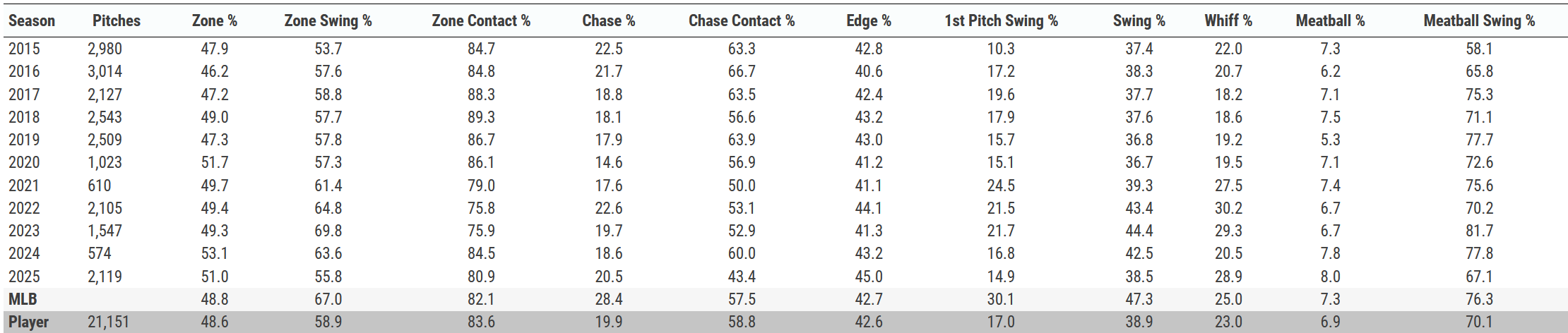
These stats document shifts in plate discipline and usually signal approach changes. His ability to hit pitches often with elite bat speed and power made him a danger in every AB, and Trout went from hitting the ball hard and often when it was in the zone to whiffing more often and hitting pitches in the zone less frequently.
Fast-forwarding to the current year, Trout’s regression continues with an uncharacteristic .229 AVG / .363 OBP / .421 SLG / .784 OPS. zCon went to below-league average along with whiff. This decline became visible in the OPS going from its usual .900 territory to the .850s and then below .800 this year. He did look closer to form in 2024 as the zCon, Whiff, and other stats were back on par, but the injuries killed his season when his left knee tendon tore. In 2025 the struggles continue with a notable decrease in SLG%. I originally thought this drop was fall-out from the hamate injury from two years past; however, hamate injuries usually sap power the first year after a player returns, and Trout’s power was on full display that year. In early 2025 Trout almost had a lopsided selling out for power with a high SLG but lower contact rates, and later in the season the trend has reversed. Since August 15th, Trout is the 11th worst player in baseball in terms of SLG (min 50 PA). I wonder if this terrible month is linked to his mindset as he approaches 400 HRs and likely wants to sell out for power.
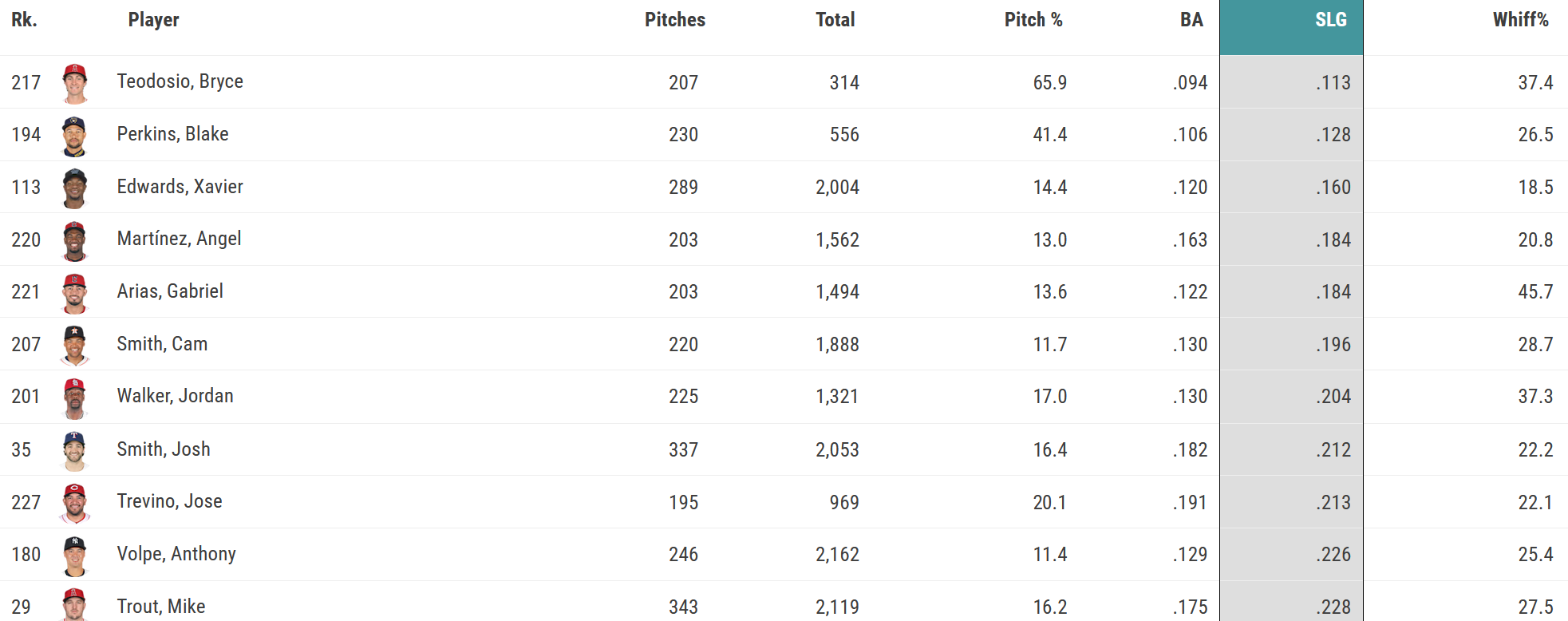
The whiff issues mentioned earlier likely stem from breaking balls, which are likely related to Trout’s steep swing. Trout has also been good against the 4S (regularly posting ridiculous run values against the pitch): 21% whiff and a .554 SLG for his career. The struggles with the breaking balls became more prevalent after that 2020 season. He used to be around a 30% whiff and .400 wOBA on breakers, but the whiff has climbed to 38% over the past 5 years with this year reaching a ~39% whiff and a .264 wOBA. Not good. Trout has one of the steeper swing path tilts in baseball akin to renowned homer hitters like Shohei Ohtani, Aaron Judge, and Eugenio Suarez:
These players routinely post high whiffs and whiff north of 35% on breaking balls. It must not only be a by-product of the swing path but also their approach to hit homers.
Another interesting aspect of Trout’s approach is his shift in early and late counts. He’s one of the best hitters in baseball at running up pitch counts, fouling off pitches, and extending at-bats (ABs). Early in counts Trout is trying to hunt for damage and get his hands extended:
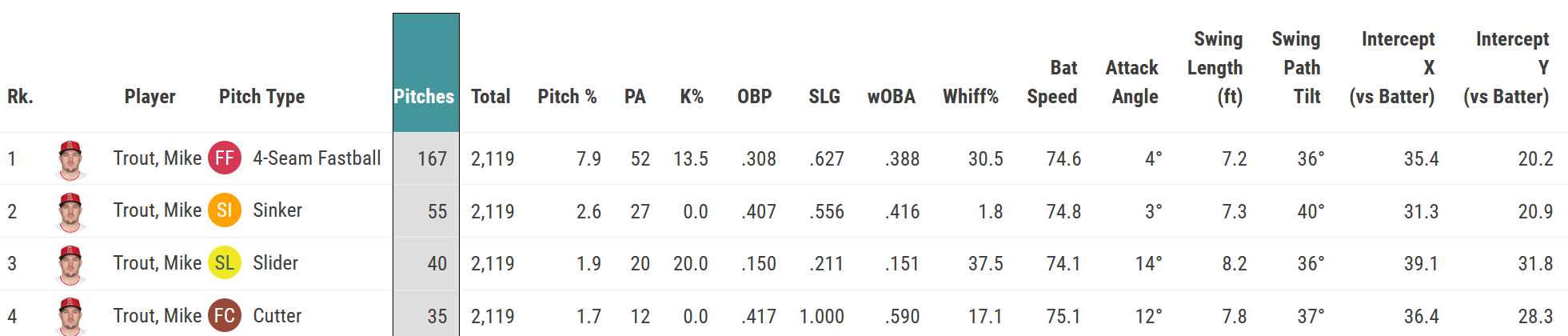
Later in counts Trout shortens up and focuses on fouling off pitches, either striking out, putting the ball in play, or getting his to hit:
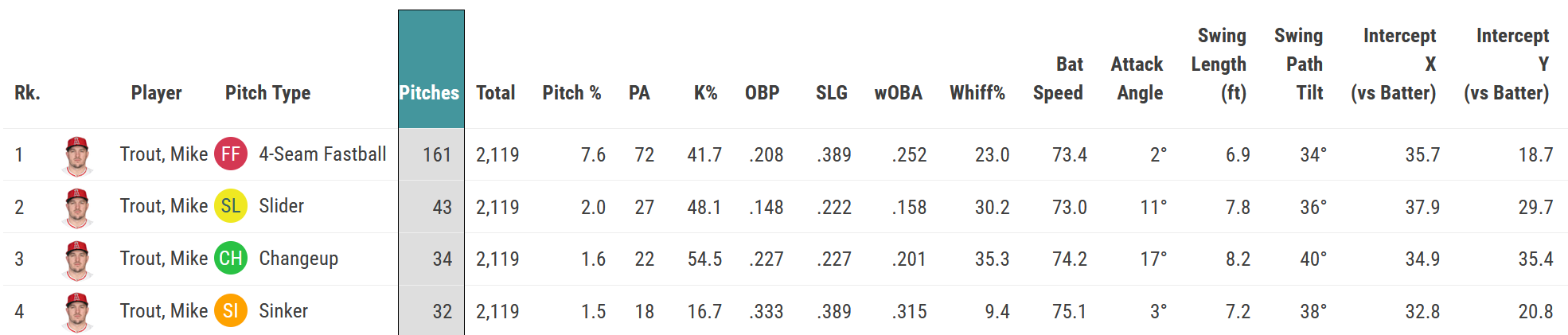
This part is speculation but what if Trout is emphasizing running pitch counts up/walking/getting ‘x’ pitch instead of just hunting heaters, looking for damage? Almost that his approach becomes so focused on seeing pitches instead of doing damage. Besides his 1st Pitch Swing% going down from 2022 to 2025, he’s also started swinging less which could signal this focus to see pitches; he’s swinging almost 10% less than the average MLB hitter.
Physical:
Before jumping into attacking Trout’s issue, I want to look at Trout’s physical changes. As I recounted earlier, Trout has had several extreme injuries which have not only limited his playing time but changed a few things biomechanically for him. Notably, the sprint speed has dropped a ft/sec year-over-year since 2023, and I don’t think its just because he’s a year older or because he’s at a 30 BMI with elite sprint speed. Upon looking at some hitting video, there are a few things that stick out to me. Besides Trout being an amazing mover in spite of his size, he adjusts his spine well to get to pitches. Going back to changes from his injuries, it appears as if he does a worse job of clearing his hips this year. In a lot of his swings this year, Trout almost golfs it and then slides with his lower half. In previous years it looks like he’s more stable in the lower half and slides later in the hitting mechanics. With such extreme injuries, I would imagine Trout has had to compensate in a variety of ways so that swinging feels more normal/natural.
The other two physical things are his position in the box and bat speed. I wonder how much being in the back of the box is good for him. It allows him to see pitches, but I bet it comes with trade-offs. There’s also been a bit of a bat speed decline (down about 2 mphs from last year and the fast-swing rate dropped a bit too) but that is probably related to the focus on fouling pitches off late in counts.
The Fixes:
The biggest things to address are the zCon drop-off and whiffs against breaking balls and getting his body right. To some Trout looks like a Joey Gallo in that he’s become so Three-True Outcome (TTO) as he either walks, strikes out, or homers. I think there are a few ways to improve the contact without sacrificing the bat speed. He could emphasize going for more contact as opposed to running up pitch counts. Maybe there’s room to get his bat started a bit earlier to pull the ball a bit or make a more favorable intercept to collect more hits. I also think some adjustments for his position in the box could help getting that intercept right (he kills the ball when he pulls it).

For the breaking balls, that could be more reps in the off-season or lowering his hands a bit in his stance. This change should allow him to get to his load but more easily get to both high heaters and low breakers. His current hand position allows him to get through the ball well but leaves him prone to breaking balls down.
The last point is that he’s going to get better the farther he gets away from his injuries. Again, these are freak injuries that popped up out of nowhere and sidelined a phenomenal talent. Getting healthy, getting the speed back, and building enough capacity to endure a full-season will get him back up to needed physical preparedness. The Angels have already started playing Trout at more DH and COF to make the most of his bat’s value.
Future:
This upcoming year is going to be a big one for the 3x MVP. He’s still got the tools and ability to be a phenomenal ball player, but its about doing everything in his power to stop Father Time’s regression therapy. He’s a Hall-of-Famer and a once in a generation player, so it’ll be up to him to respond to these past seasons.
It could go two ways:
He continues to regress and becomes a league-average player, mentoring Angels’ players and coaches until he has to retire due to injuries and performance.
OR
Trout is able to rebound and put up a couple more quality seasons, leading his team to another postseason appearance and a couple more accolades before time starts to catch up to him.
He could continue to regress and enjoy his hard-earned money; however, I'm challenging The Kid to step up to the plate and swing back one more time.
Questions:
Is the Plate Discipline and increase in whiffs related to his high walk rate?
Trout has always been one to walk well historically, so the increase in whiffs and decrease in zCon isn’t related to the high volume of pitches he sees.
Why did Trout originally start selling out for more power?
What’s Mike Trout’s WAR compared to the rest of the Angels’ players over his career? What about the last 5 years?
What’s the medical/physical report look like?
How has his outlook changed post-injury?
What will Angels’ management do to support Trout’s return?
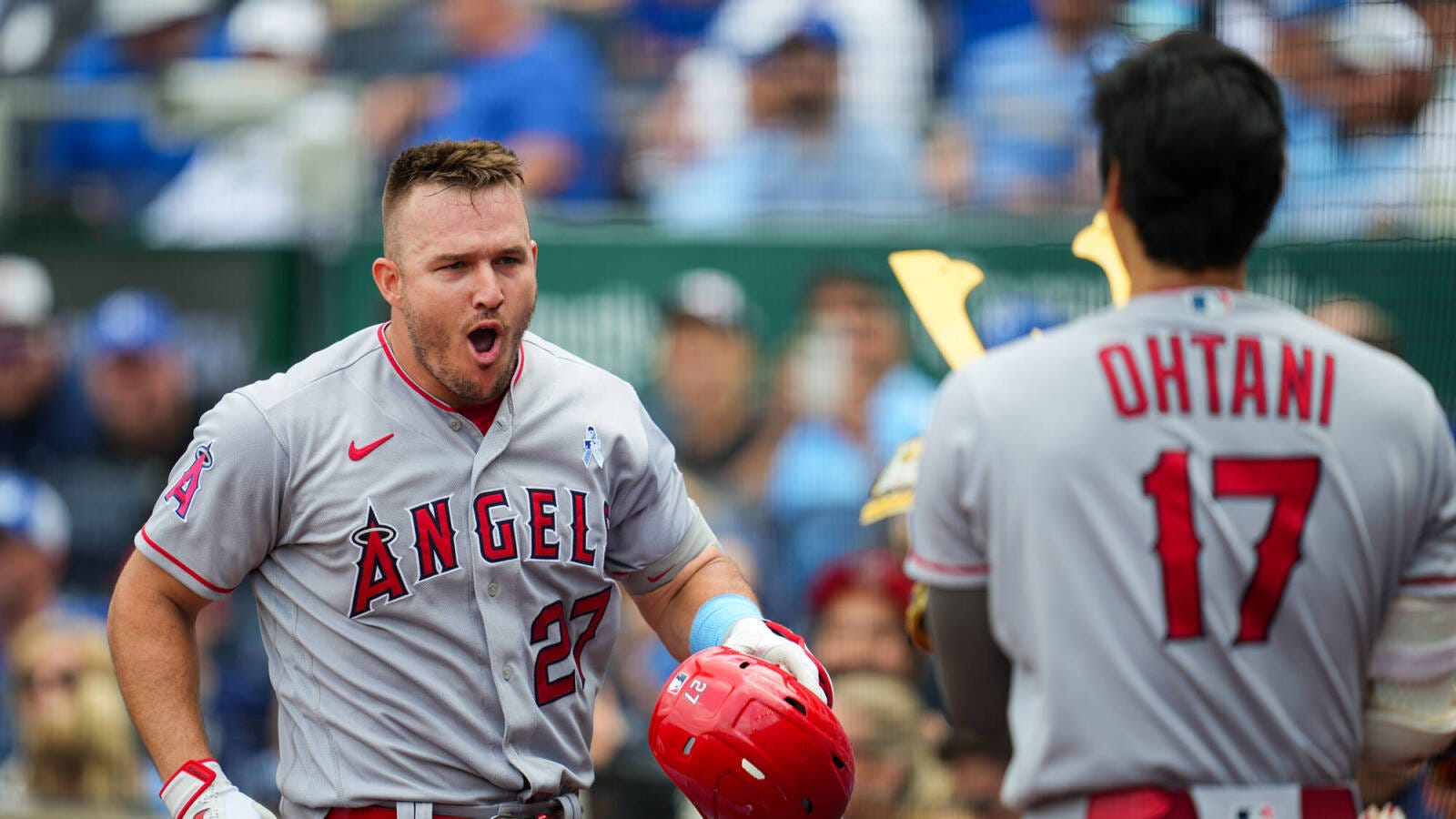
Thank you for reading and good luck to the Greatest Hitter of his generation!
Also if anyone can find the photographers’ credit for the pictures, I’m willing to correct the work, I couldn’t find the photographers.